Resources

Start with a guide

The sources we found most useful for working out how governments use algorithms: how to find them, what to ask for and what to do when an agency says no.

See how it was done

Investigations that exposed a government system, with the evidence they used and how they got it.

  • NL · 2023

    Suspicion Machines: Rotterdam's welfare fraud risk score

    Rotterdam ranked every welfare recipient by fraud risk with a machine-learning model, and journalists did something that almost never happens: they got hold of the model itself and took it apart. They found it scored parents, young people, women and people with weaker Dutch higher, and that it was only about 50 percent more accurate than random selection. The city had already put it on hold, and later agreed the Dutch-language variables were an unacceptable proxy for migrant background.

  • SE · 2024

    Sweden's Suspicion Machine: the Social Insurance Agency's parental benefit risk model

    In Sweden the Social Insurance Agency refused almost everything for three years, and the investigation went ahead anyway by going through the agency's overseer. It showed that a risk model for parental benefit selected women more than 1.5 times as often as men, and people with a foreign background about 2.5 times as often. Amnesty International called for the system to be discontinued, and in 2025 the agency took it out of use.

  • NL · 2025

    The Limits of Ethical AI: Amsterdam's Smart Check welfare pilot

    Amsterdam did nearly everything the responsible-AI playbook asks: it opened its records, tested for bias, consulted citizens and built a model that could be explained. The journalists still found it unfair. In the live pilot the bias reversed, with Dutch applicants and women wrongly flagged more often, and the model did no better than caseworkers. The city stopped the pilot in November 2023.

  • FR · 2023

    France's Digital Inquisition: the family benefits fund's risk score

    In France, journalists used access-to-information law to get the scoring code of the national family benefits fund. The model gives every household on the benefit rolls a risk score, and the authors say it pushes scores up for single parents, low-income households and people with disabilities. The disclosure fed a court case that is still pending, and in January 2026 the fund published the source code of its current model.

  • NL · 2023

    The discriminatory fraud checks of DUO

    Reporters could not get into the Dutch student-finance agency's risk system, so they asked lawyers for their case counts instead. Of 376 objection and appeal cases the 32 lawyers had handled since 2012, 367 involved students with a migration or bicultural background. The education minister suspended algorithm-based selection in 2023, the data protection authority later found the checks unlawfully discriminatory, and the state accepted liability for the damage.

  • NL

    The Dutch childcare benefits scandal: the tax authority's risk classification model

    The Dutch tax authority scored childcare benefit applications with a self-learning risk model, and Dutch citizenship was one of its inputs. Tens of thousands of parents were wrongly treated as fraudsters, and migrant and low-income families were hit hardest. Years of reporting by Trouw and RTL Nieuws, pressure from MPs and a data protection investigation established the use of nationality in July 2020. The government resigned in January 2021, and the tax authority was fined €2.75 million. The model was one part of a wider failure.

  • NL

    SyRI: the Dutch fraud risk system struck down in court

    SyRI let Dutch government bodies combine personal data to predict who might commit benefits or tax fraud, and it was used mainly in poorer neighbourhoods. Almost everything about how it worked was secret. A coalition of civil-society groups and two writers, later joined by the FNV union, took the state to court. In February 2020 a court in The Hague ruled that the law behind it breached the right to private life, because its use could not be understood or checked. The government did not appeal.

  • DK · 2024

    Coded Injustice: Denmark's automated welfare fraud controls

    Denmark's benefits agency runs about 60 fraud models, and it refused Amnesty's requests for a joint audit and full access to code and data. With redacted documents on four models and dozens of interviews, Amnesty still raised serious discrimination concerns: one model scores 'foreign affiliation', ties to countries outside the EEA, to prioritise investigations. It is a good example of building a credible case when code and data are refused. As far as we could find, nothing has changed since.

  • UK · 2024

    The DWP model that flags Universal Credit advance requests for fraud

    A records release forced the UK's Department for Work and Pensions to admit statistically significant disparities in a fraud tool that scores Universal Credit advance requests. Its own later figures show non-UK nationals were referred about 2.27 times as often as UK nationals in 2024/25, and about 3.35 times in 2025/26. DWP says a caseworker decides every flagged case. It published its fairness assessment and committed to retrain the model, which stays in use until a retrained version is tested.

  • UK

    The Home Office visa 'streaming tool'

    From 2015 the UK Home Office used a 'streaming tool' that rated visa applications red, amber or green, which decided how much scrutiny they got. After a long effort to find out how it worked, the Joint Council for the Welfare of Immigrants (JCWI) and Foxglove brought a judicial review arguing it discriminated on nationality. In August 2020, before a hearing, the Home Office confirmed nationality was one of its factors and dropped the tool pending a redesign, without accepting the claims.

  • ES · 2024

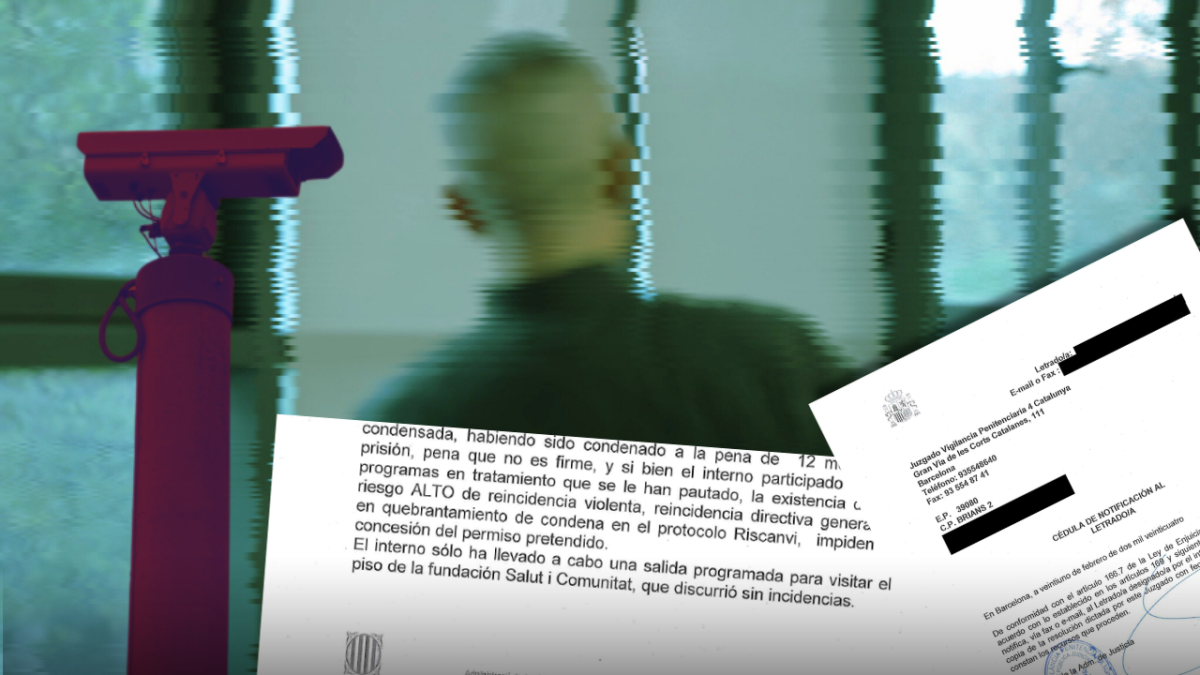
    RisCanvi: the Catalan prison risk score few outside could check

    RisCanvi scores people in Catalan prisons, and its results shape furlough, parole and prison-grade decisions. An outside team audited it without access to its weights, using a small public dataset and interviews. They found it affected 7,713 people in 2022, and that professionals changed the final rating in under 5% of cases. The Justice Department began an update after the audit, which was reported as still underway in March 2026.

  • ES · 2022

    VioGen: auditing a gender-violence risk score without the data

    Spain's VioGen scores a woman's risk of being attacked again, and that score determines the level of police protection. An outside audit tested it against a public homicide dataset and interviews with survivors. It found that about 73% of 475 homicide victims had no prior police report, so the system never scored them. In January 2025 the Interior Ministry presented VioGen 2 with recalibrated algorithms and removed the lowest risk level, saying it was a planned update, not a reaction.

  • ES

    BOSCO: the software behind Spain's electricity discount

    BOSCO is the software that checks who qualifies for Spain's bono social, a discount on electricity bills for vulnerable households. Rejected applicants contacted Civio, and their cases showed it was turning away people who were entitled, including widowed pensioners. Civio asked for the source code in 2018 and was refused at every stage until September 2025, when the Supreme Court ruled it had a right to the code. We could not find reporting on whether the code has since been handed over.

  • PL

    Profiling the unemployed in Poland

    From 2014, Polish job centres placed unemployed people into one of three profiles using a scored, computer-based interview, and the profile decided what help they could get. The scoring logic was confidential, and the questions only became public after the Panoptykon Foundation used freedom of information law. Its research and the Human Rights Commissioner's referral took the system to the Constitutional Tribunal, which ruled it unconstitutional in 2018. Profiling ended in 2019.

  • AT

    The AMS algorithm: Austria's jobseeker scoring system

    Austria's public employment service (AMS) built an algorithm, AMAS, to sort jobseekers into groups with high, medium and low chances on the job market. Its development documentation showed that gender and citizenship lowered some people's predicted chances, and that care duties counted only for women. After concerns from researchers, the Ombudsman Board and digital-rights groups, the data protection authority stopped it in August 2020. The courts later sided with the AMS, which had deleted all AMAS data and said it would not revive the system.

  • RS · 2023

    Trapped by Automation: Serbia's Social Card registry

    Serbia's Social Card registry, funded with World Bank support, merges data from many government databases to profile people applying for social assistance. Amnesty found that recipients fell by about 35,000 after the law took effect, and says Roma and people with disabilities were hit hardest, partly because of wrong source data. The ministry rejected the findings. The World Bank's Inspection Panel first recommended an investigation, then dropped it after the Bank reported corrective steps such as training and workshops. In December 2025 the Board approved not investigating, which closed the case.

Go deeper

The research behind it: what algorithm registers show and leave out, and how governments are held to account.

All 14 papers

Know something we should add?